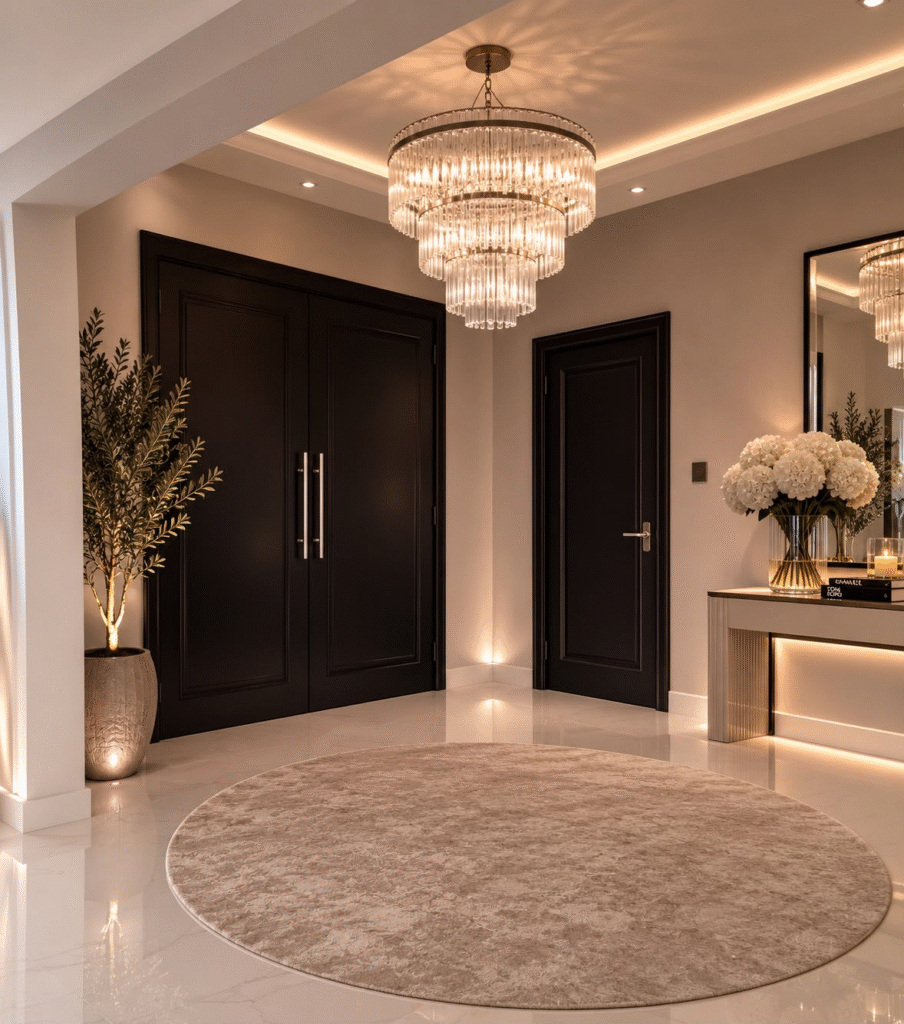
The foyer is the first room guests see, and the light fixture hanging in it sets the tone for everything that follows. A tiered crystal chandelier — with multiple concentric rings of vertical crystal rods — does more than illuminate an entryway. It creates a focal point that draws the eye upward, casts patterned light across the ceiling, and gives the space a sense of occasion.
This article breaks down the design of a three-tier round crystal chandelier, explains where it works well, describes the lighting effect it produces, and offers practical guidance on sizing, styling, and maintenance.
- Product Design: What Makes a Tiered Crystal Chandelier Work
A three-tier crystal chandelier is built around concentric metal rings, each holding a row of vertical crystal rods. The rings decrease in diameter from top to bottom, creating a stepped, cascading silhouette that reads as structured rather than ornate.
The Crystal Rods
Instead of traditional hanging drops, this style uses vertical crystal rods — long, prismatic glass pieces that hang straight down from each ring. The rods catch light along their full length and refract it outward. Because they are uniform in length and aligned in rows, they produce a clean, orderly shimmer rather than the scattered sparkle of loose crystal drops.
The crystal rods are transparent, which keeps the fixture visually light. Even with three tiers, the chandelier does not feel heavy or block the view through the foyer.
The Metal Frame
Each tier is held by a circular metal ring in a warm finish — antique brass or bronze tones work well with crystal. The metal ring is thin and unobtrusive, so the crystal remains the visual focus. A matching ceiling canopy and short chain or rod connect the fixture to the ceiling, keeping the profile clean.
The warm metal finish is important: it complements the warm light passing through the crystal and pairs naturally with wood doors, stone floors, and neutral wall colors common in modern foyers.
The Three-Tier Structure
Three tiers give the chandelier presence without excessive height. The top tier is the widest, the middle tier narrower, and the bottom tier the narrowest. This stepped shape creates visual rhythm and allows light to escape between tiers, casting layered patterns on the ceiling above.
The three-tier format also distributes light evenly. The top tier washes the ceiling, the middle tier fills the room at eye level, and the bottom tier casts light downward toward the floor. The result is balanced illumination rather than a single hot spot.
Light Source and Quality
The bulbs sit within the metal rings, hidden behind the crystal rods. This means the light source is not directly visible — the crystal diffuses and softens it. Warm white bulbs in the 2700K to 3000K range produce a golden glow that flatters the crystal and the surrounding space.
When the fixture is on, the crystal rods glow from within and cast a patterned shadow of vertical lines onto the ceiling. This ceiling pattern is one of the fixture’s signature effects — it turns a plain ceiling into a textured surface.
- Where This Chandelier Performs Well
A tiered crystal chandelier is versatile, but it performs particularly well in spaces with enough ceiling height and visual room to show off its structure.
Foyers and Entryways
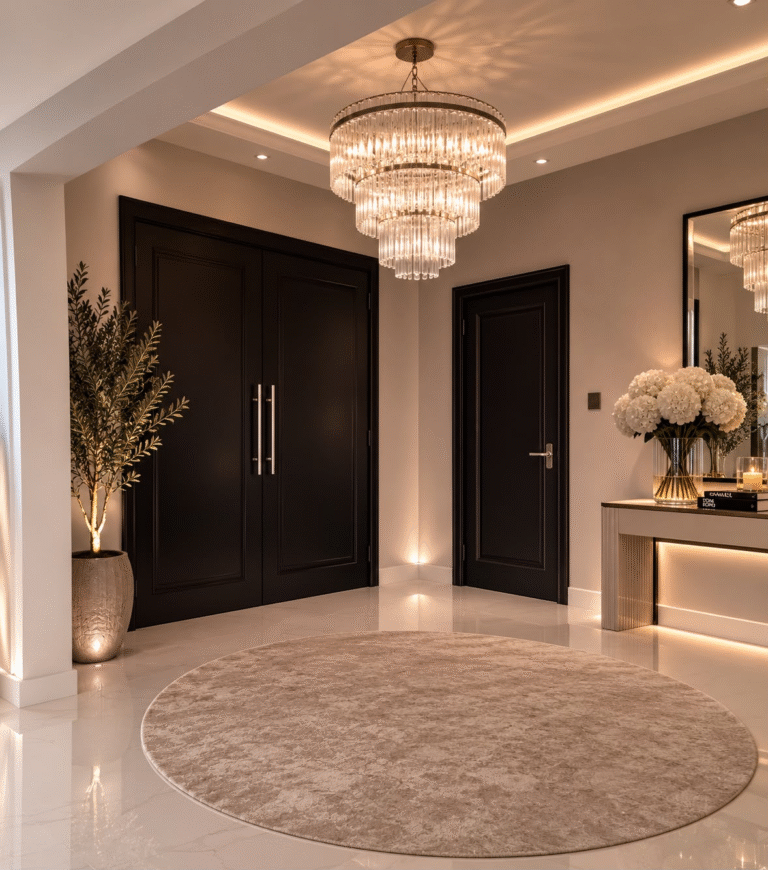
The foyer is the natural home for this fixture. Hanging centered in the entryway, it greets guests and establishes the home’s design language. In the space shown, the chandelier hangs above a round rug, between dark double doors and a console table — a classic foyer layout where a circular fixture mirrors the circular rug below.
Foyers with 9-foot ceilings or higher can accommodate a three-tier fixture comfortably. The chandelier should hang so its bottom is at least 7 feet above the floor, leaving clearance for people walking underneath.
Hallways and Galleries
Long hallways with high ceilings benefit from a tiered chandelier because the fixture’s vertical structure fills the height without requiring a wide footprint. A single three-tier chandelier in the middle of a hallway can anchor the space, or two smaller versions can be spaced along a longer gallery.
Dining Areas
A round tiered crystal chandelier works above a round or oval dining table, where the circular shape of the fixture echoes the table below. The three tiers provide even light across the table surface, and the crystal adds a decorative element suitable for entertaining.
Hotel Lobbies and Boutique Entrances
Commercial spaces such as boutique hotel lobbies, restaurant entrances, and luxury retail foyers use tiered crystal chandeliers to create an immediate impression. The fixture’s structured silhouette feels contemporary and polished, fitting spaces that want elegance without the formality of traditional crystal chandeliers.
Staircase Landings
A two-story foyer with a staircase is an ideal setting. The chandelier can be hung at the landing level, visible from both the ground floor and the upper hallway. The three-tier structure fills the vertical volume of a two-story space more effectively than a single-tier fixture.
- Overall Lighting and Visual Effect
The impact of a tiered crystal chandelier is most visible when the lights are on, but it contributes to the room even during the day.
Ceiling Light Pattern
As light passes through the vertical crystal rods, it casts a pattern of parallel vertical lines and soft glows onto the ceiling above. This pattern is dynamic — it changes slightly as you move around the room — and it gives a plain ceiling texture and depth. In the foyer shown, this ceiling pattern is visible as a warm, radiating design above the chandelier.
Warm Ambient Glow
Because the bulbs are hidden behind crystal rods, the light is diffused rather than direct. The fixture fills the foyer with a warm, even ambient glow that flatters skin tones and makes the space feel welcoming. There are no harsh shadows or bright bulbs visible — just a soft, golden light.
Visual Height and Space
A tiered chandelier draws the eye upward, which makes the ceiling feel higher and the room feel more spacious. The stepped tiers create vertical movement, and the transparent crystal keeps the fixture from visually blocking the space. In a foyer with a standard 8- or 9-foot ceiling, this upward draw can make the room feel more generous than its actual dimensions.
Daytime Presence
Even when turned off, a crystal chandelier contributes to the room. Natural light from windows or doors catches the crystal rods and creates subtle highlights. The metal frame and structured silhouette serve as a sculptural element in the room, not just a light fixture.
Reflection and Multiplication
Placing a mirror opposite or adjacent to the chandelier doubles its visual impact. In the foyer shown, a mirror on the right wall reflects the chandelier, making the space feel larger and the light feel more abundant. This is a simple design trick that amplifies the fixture’s effect without adding another light source.
- Interior Matching and Styling Suggestions
A tiered crystal chandelier is a statement piece, but it works particularly well when the surrounding elements support rather than compete with it.
Pair With Neutral Walls
Warm neutral walls — off-white, cream, light greige, or soft taupe — provide the ideal backdrop for crystal. The neutral wall reflects the warm light and lets the chandelier stand out without color competition. Avoid bold or dark wall colors in a foyer with a crystal chandelier, as they absorb light and reduce the fixture’s sparkle.
Choose a Round Rug
A round chandelier pairs naturally with a round rug below. The circular shapes echo each other and create a sense of order in the foyer. Choose a rug with a subtle texture or low pattern — a solid or heathered texture in beige, cream, or light gray works well. Avoid busy patterns that would compete with the chandelier’s ceiling pattern.
Match Metal Finishes
The chandelier’s warm brass or bronze frame should be echoed in other metal elements in the room: door handles, cabinet hardware, mirror frames, and table lamps. Consistent metal finishes make the space feel curated. In the foyer shown, the dark door handles and the warm metal of the chandelier work together because the doors are a dark neutral that does not clash.
Add a Console or Table
A console table against one wall of the foyer gives the chandelier a visual anchor below. Style the console with a vase of flowers, a stack of books, or a small table lamp. Keep the styling minimal — the chandelier is the star, and the console should support it without drawing attention away.
Use Dark Doors for Contrast
Dark interior doors — black, deep charcoal, or espresso — create a strong contrast against light walls and make the crystal chandelier pop. In the space shown, the black double doors and single door frame the chandelier and give the foyer a modern, tailored look. If dark doors feel too bold, dark wood doors in a walnut or espresso finish achieve a similar effect with more warmth.
Incorporate Greenery
A potted plant or small tree in the foyer adds organic contrast to the structured crystal and metal. An olive tree, ficus, or tall succulent in a textured planter brings life to the space and softens the hard surfaces of stone floors and crystal. In the foyer shown, a potted olive tree in the left corner balances the console table on the right and adds a natural element.
- Sizing, Installation, and Maintenance
Getting the right size and installation ensures the chandelier looks intentional and performs well.
Sizing for the Foyer
To determine the right diameter, add the foyer’s length and width in feet, then use that number in inches as a starting point for the chandelier diameter. For example, a foyer that is 8 feet by 10 feet can support a chandelier around 18 inches in diameter. A three-tier fixture may need to be slightly larger than a single-tier fixture to maintain visual proportion.
For hanging height, the bottom of the chandelier should be at least 7 feet above the floor in a walk-through area. In a foyer with 9-foot ceilings, a three-tier chandelier with a total height of 18 to 24 inches works well. With higher ceilings, you can go taller or hang the fixture lower on a longer chain.
Ceiling and Structural Requirements
A crystal chandelier is heavier than a basic flush-mount or pendant. Confirm that the ceiling electrical box is rated for the fixture’s weight, or install a support brace between ceiling joists. Hire a licensed electrician for installation if you are not experienced with heavy fixtures or ceiling wiring.
If the foyer has a coffered or tray ceiling, center the chandelier in the recessed portion of the ceiling rather than the overall room. This aligns the fixture with the ceiling architecture and makes the installation look intentional.
Dimmer Switches
Always put a foyer chandelier on a dimmer. Full brightness is useful for cleaning, moving luggage, or finding keys, but a lower setting creates the warm, welcoming atmosphere that crystal lighting is known for. A dimmer also extends bulb life and gives you control over the ceiling light pattern’s intensity.
Bulb Selection
Use warm white bulbs (2700K to 3000K) with a CRI of 90 or higher for the most flattering light. LED bulbs are recommended for their long life and low heat output, which is important for a fixture with crystal that can be sensitive to heat. Avoid cool white or daylight bulbs (5000K+) — they make crystal look harsh and wash out the warm tones of the metal frame.
Cleaning and Maintenance
Crystal rods collect dust over time, which reduces their sparkle. Clean the fixture every two to three months with a soft, lint-free cloth. For light dust, a dry microfiber cloth works. For heavier buildup, dampen the cloth with a gentle glass cleaner and wipe each rod individually. Never spray cleaner directly onto the fixture — liquid can seep into the electrical components.
Turn off the power and let the bulbs cool before cleaning. If the fixture is high or large, use a sturdy step ladder and have a second person hold the ladder for safety.
Frequently Asked Questions
Q: What is the difference between a tiered chandelier and a traditional crystal chandelier? A: A traditional crystal chandelier uses curved arms and hanging crystal drops in an organic, ornate arrangement. A tiered chandelier uses concentric circular rings with vertical crystal rods, creating a structured, contemporary silhouette. Tiered chandeliers tend to feel more modern and less formal.
Q: How high should a tiered chandelier hang in a foyer? A: The bottom of the fixture should be at least 7 feet above the floor to allow comfortable clearance. For 9-foot ceilings, a fixture 18 to 24 inches tall works well. For higher ceilings, you can hang it lower or choose a taller fixture.
Q: Can I use a tiered crystal chandelier in a room with 8-foot ceilings? A: Yes, but choose a more compact fixture. A three-tier chandelier with a total height of 14 to 18 inches and a diameter of 16 to 20 inches can work in an 8-foot foyer. Avoid very tall or wide fixtures that would overwhelm the space or hang too low.
Q: Are crystal rod chandeliers difficult to clean? A: The vertical rods are actually easier to clean than loose hanging drops because they are uniform and accessible. Wipe each rod with a soft cloth every few months. Avoid spraying liquid directly onto the fixture.
Q: What color temperature is recommended for a crystal chandelier? A: Warm white in the 2700K to 3000K range is recommended. This temperature produces a golden glow that flatters crystal and warm metal finishes. Cool white bulbs (5000K+) can make crystal look harsh and clinical.
Q: Can a tiered chandelier be used in a dining room? A: Yes. A round tiered chandelier pairs well with a round or oval dining table. Hang it 30 to 36 inches above the table surface. The three tiers provide even light across the table, and the crystal adds a decorative element for entertaining.
Conclusion
A three-tier round crystal chandelier is more than a light fixture — it is a design element that shapes the atmosphere of a foyer. Its concentric rings of vertical crystal rods produce a warm, diffused glow and cast a patterned light across the ceiling, while its structured silhouette feels contemporary and polished.
To make the most of this fixture, hang it centered in the foyer with at least 7 feet of clearance below, pair it with neutral walls and a round rug, echo its warm metal finish in door hardware and mirror frames, and put it on a dimmer with warm white bulbs. With these choices in place, the chandelier becomes the element that makes the entryway feel complete — the first thing guests notice and the last thing they remember.