The dining room is more than a place for meals. It can also become a space for family conversations, gatherings, working, reading, or enjoying a quiet moment during the day. Because of this, lighting has an important role in creating the right atmosphere.
A modern dining room often combines simple architecture, carefully selected furniture, large windows, and decorative lighting. When these elements work together, the room can feel comfortable, organized, and visually connected.
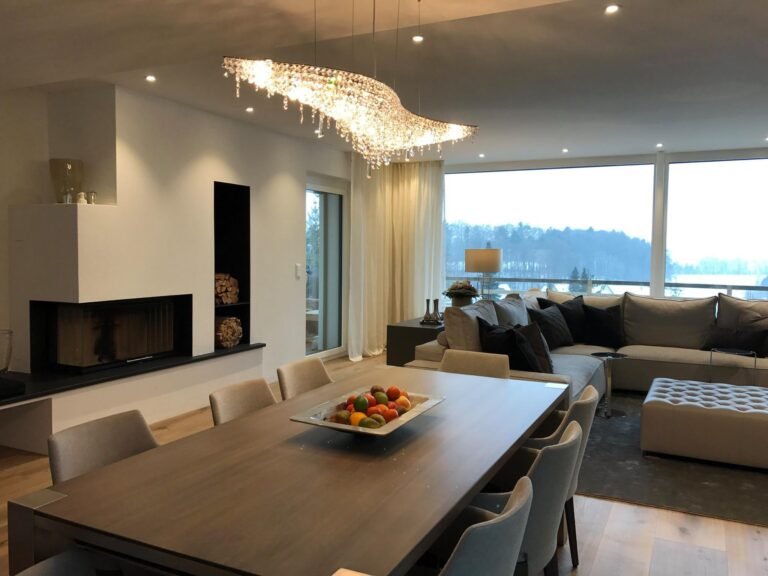
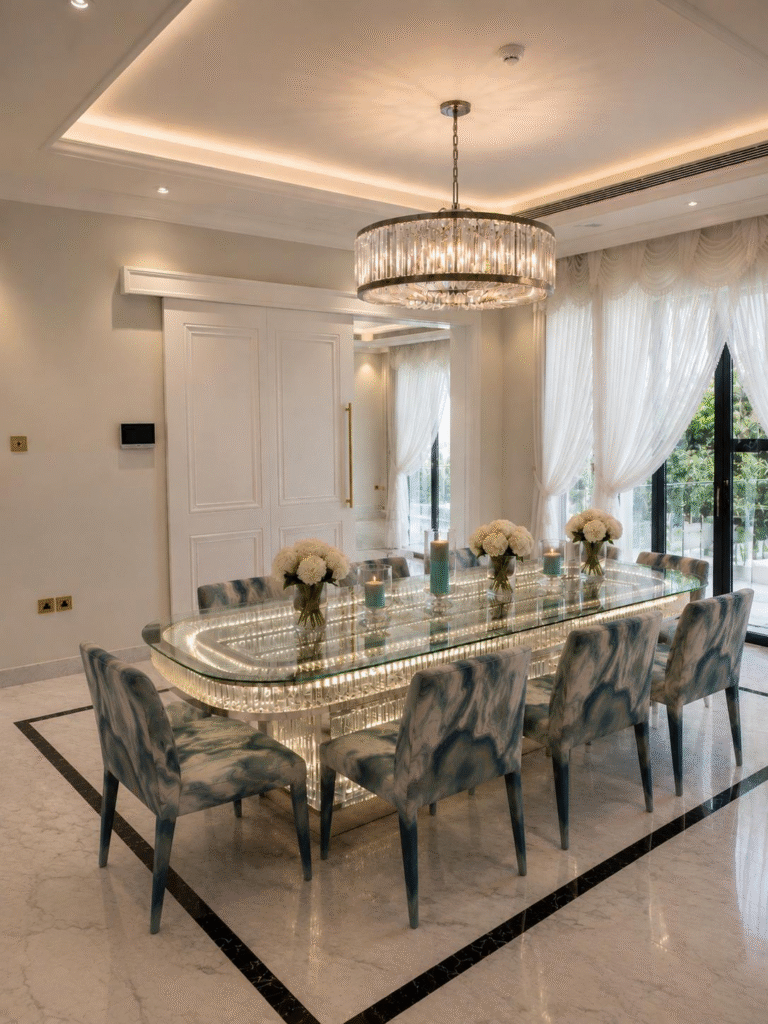
The dining space shown in the image provides a good example of how lighting can interact with the overall interior design.
1. Start With the Dining Table
The dining table is usually the visual center of a dining room. Its size, shape, material, and position influence how lighting should be arranged.
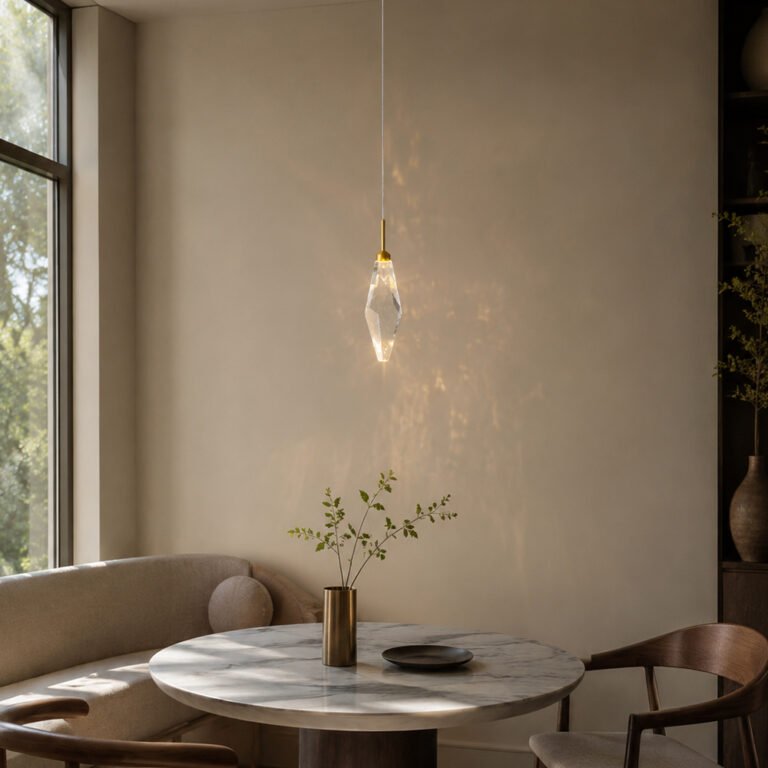
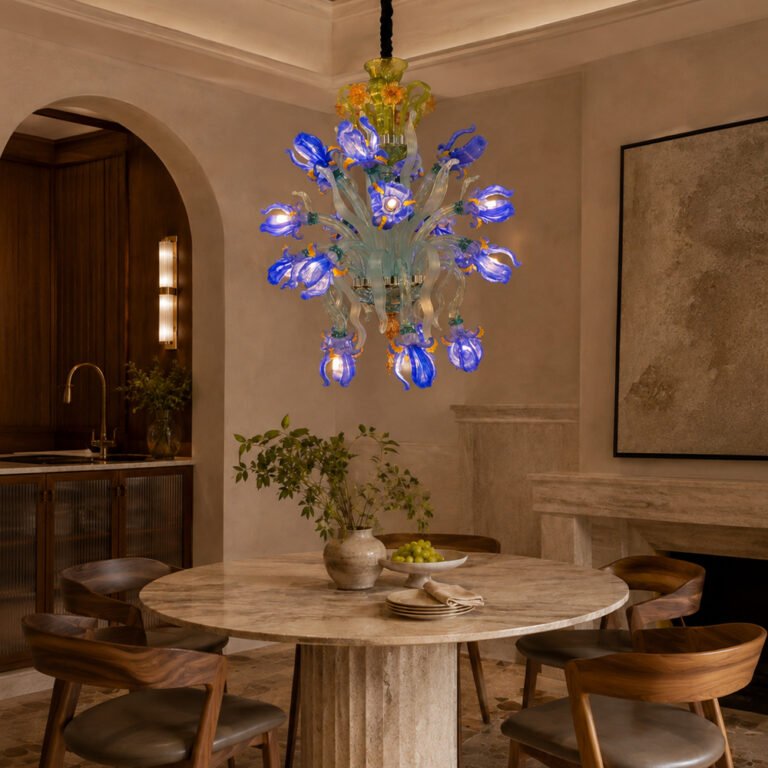
For a rectangular dining table, linear lighting or a group of pendant lights can provide a balanced visual relationship with the table. For a round table, a centered pendant light can create a more unified composition.
The height of the lighting fixture is also important. A fixture positioned too high may lose some of its visual connection with the table, while one positioned too low can interfere with conversations and everyday activities.
A practical approach is to consider the table dimensions first and then select a lighting solution that fits the proportions of the space.
2. Combine Natural Light With Decorative Lighting
Large windows can introduce plenty of natural light during the daytime. In the example shown, the glass doors and light-colored curtains allow daylight to enter the dining area while connecting the interior with the outdoor space.
Natural light can make reflective surfaces more noticeable. Glass, metal, crystal-like elements, polished stone, and other materials can interact with sunlight and create changing visual effects throughout the day.
However, natural light changes according to the time of day and weather conditions. Decorative lighting therefore remains useful for evenings and areas with limited daylight.
A combination of natural and artificial lighting allows the dining room to maintain a consistent visual atmosphere across different times of the day.
3. Consider the Relationship Between Lighting and Furniture
Lighting should not be considered separately from furniture.
The dining chairs, table, curtains, flooring, and decorative accessories all contribute to the overall appearance of the room. When these elements share compatible shapes, materials, and tones, the lighting fixture can become part of the overall interior composition rather than appearing as an isolated feature.
For example, a dining table with reflective details can work well with lighting that contains glass or crystal-inspired elements. Soft textile chairs and curtains can also balance reflective surfaces by adding a different texture to the room.
This type of coordination is particularly useful when creating a contemporary dining room.
4. Use Layered Lighting for Different Activities
One lighting source does not always need to handle every function in a dining room.
Layered lighting can include:
- Ambient lighting for general illumination
- Decorative lighting above or around the dining table
- Recessed ceiling lights for additional illumination
- Accent lighting for decorative objects or architectural details
- Natural daylight from windows and glass doors
This approach gives homeowners more flexibility.
For example, the dining table may require focused illumination during dinner, while softer ambient lighting may be more suitable when the room is being used for conversation.
Using multiple lighting layers can also help create visual depth within an open-plan interior.
5. Pay Attention to Color Temperature
Color temperature is another factor worth considering when choosing dining room lighting.
Warm white lighting is commonly used in residential dining spaces because it can create a softer and more relaxed visual effect. Neutral white lighting may be suitable when a cleaner and more functional appearance is preferred.
The choice should also match the materials and colors used throughout the room.
For a dining room featuring white walls, light curtains, reflective surfaces, and natural daylight, a suitable color temperature can help maintain a balanced transition between daytime and evening lighting.
6. Think About Materials and Light Reflection
Materials have a direct relationship with lighting.
Reflective surfaces can spread light across the room, while matte surfaces tend to absorb more light and create a softer visual appearance. Glass and crystal-inspired components can introduce reflections and small highlights when exposed to light.
In the pictured dining area, the illuminated decorative elements around the table create a connection between the furniture and the lighting environment.
When selecting a dining room lighting fixture, it is useful to consider not only how the fixture looks when switched on, but also how its materials interact with daylight and surrounding surfaces when it is switched off.
7. Choose a Lighting Style That Matches the Interior
Modern dining rooms can incorporate many different lighting styles.
Some common options include:
- Contemporary pendant lights
- Linear dining lights
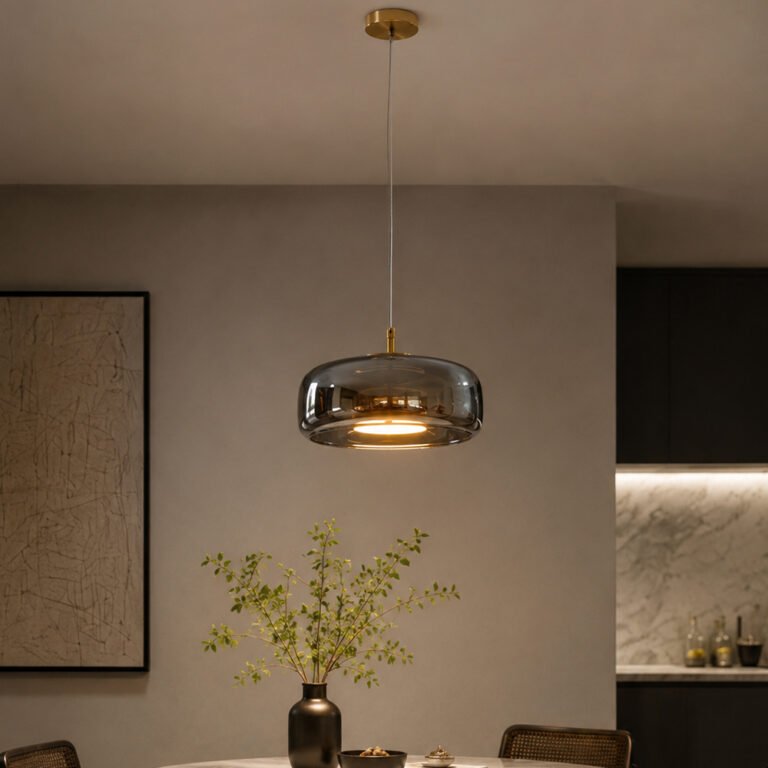
- Glass pendant fixtures
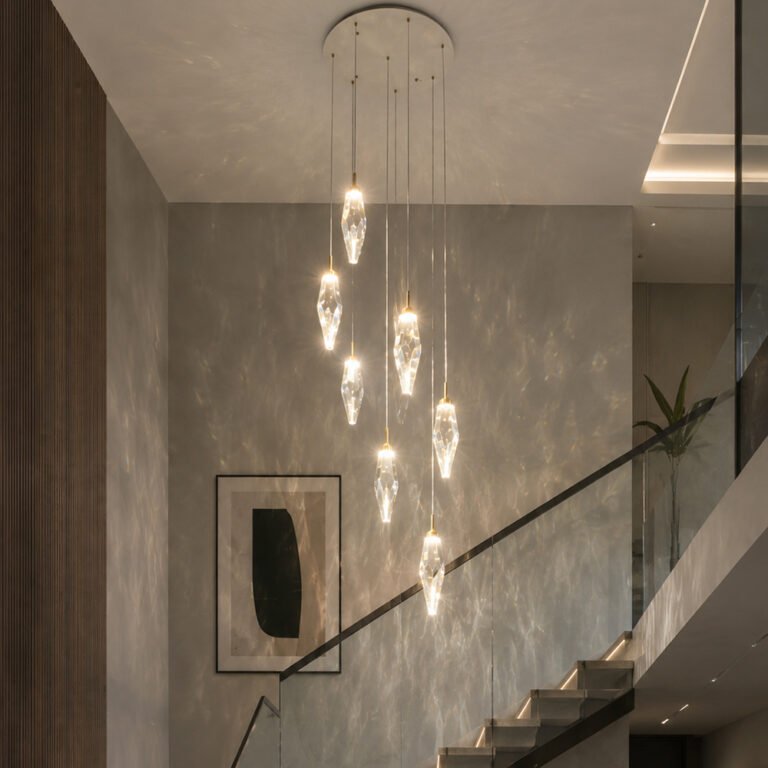
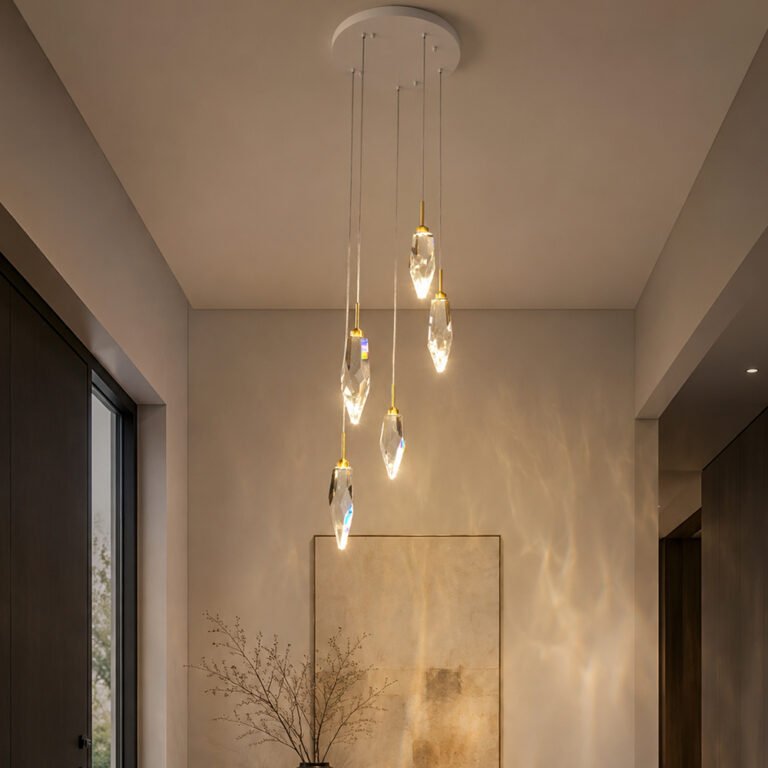
- Crystal-inspired dining lights
- Minimalist ceiling lights
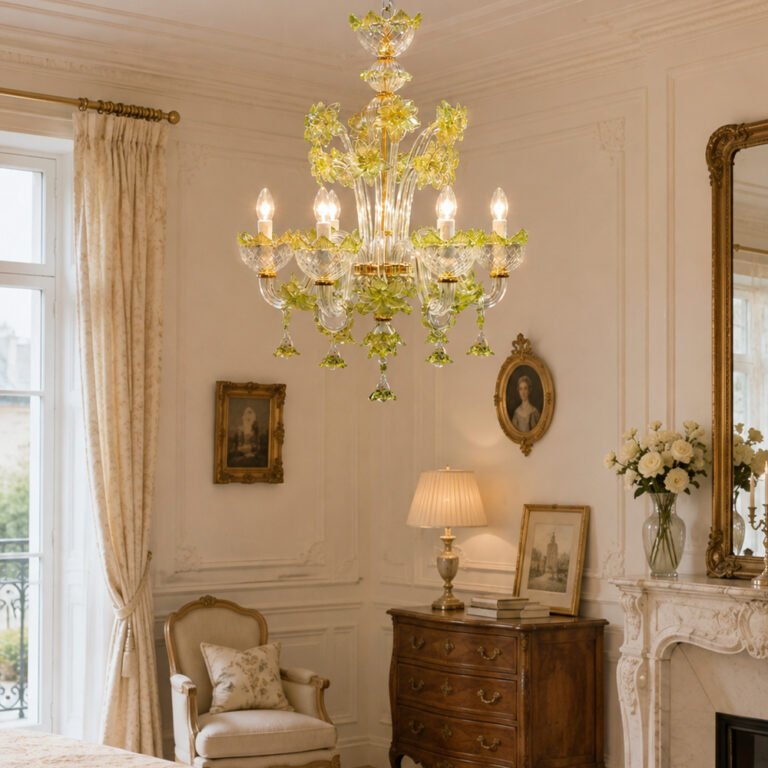
- Decorative chandeliers
- Adjustable pendant systems
The right choice depends on the size of the room, ceiling height, dining table dimensions, furniture style, and overall interior concept.
Instead of selecting a fixture based only on its appearance, consider how it fits into the complete space.
8. Create a Balanced Visual Composition
Good interior lighting is often about balance.
If the dining table is visually large, the lighting fixture should have enough presence to maintain proportion. If the table and furniture are more understated, a decorative light can introduce an additional visual element.
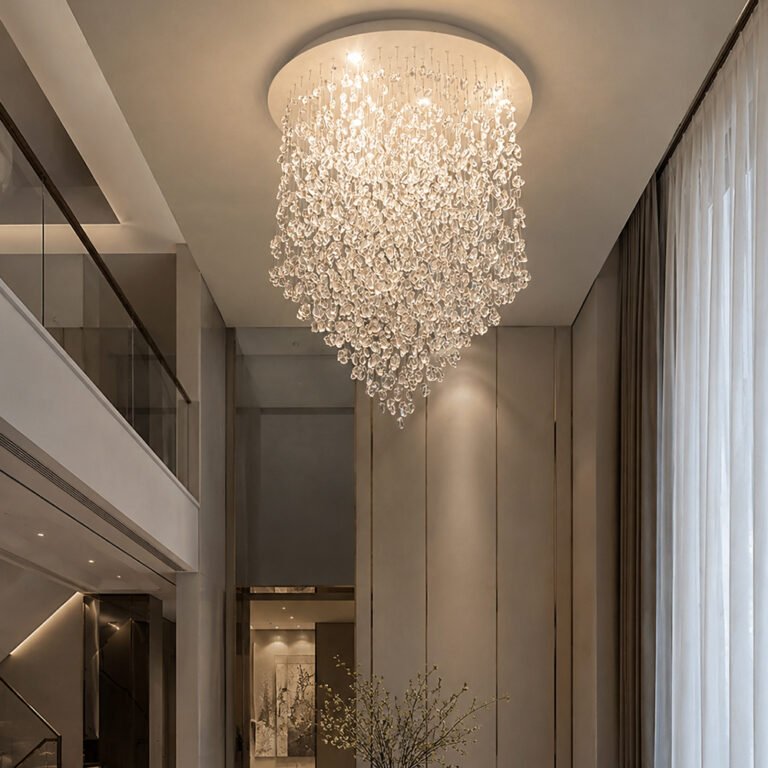
The ceiling height should also be considered. Higher ceilings can accommodate larger suspended fixtures, while rooms with lower ceilings may benefit from more compact designs.
Curtains, windows, flooring, wall colors, and decorative accessories should also be considered when planning the lighting arrangement.
Final Thoughts
Dining room lighting can influence how furniture, materials, architectural features, and decorative elements are perceived. A thoughtful lighting plan combines functionality with the visual character of the room.
Natural daylight can provide changing illumination throughout the day, while decorative and ambient lighting can support evening activities. By considering the dining table, furniture proportions, materials, color temperature, and lighting layers together, it becomes easier to create a dining environment that feels cohesive and comfortable.
Whether the interior uses glass, metal, crystal-inspired details, natural materials, or simple modern furniture, lighting can become an important part of the overall design.